
Heat-Blocking Windows: Stay Cool and Save Energy This Summer
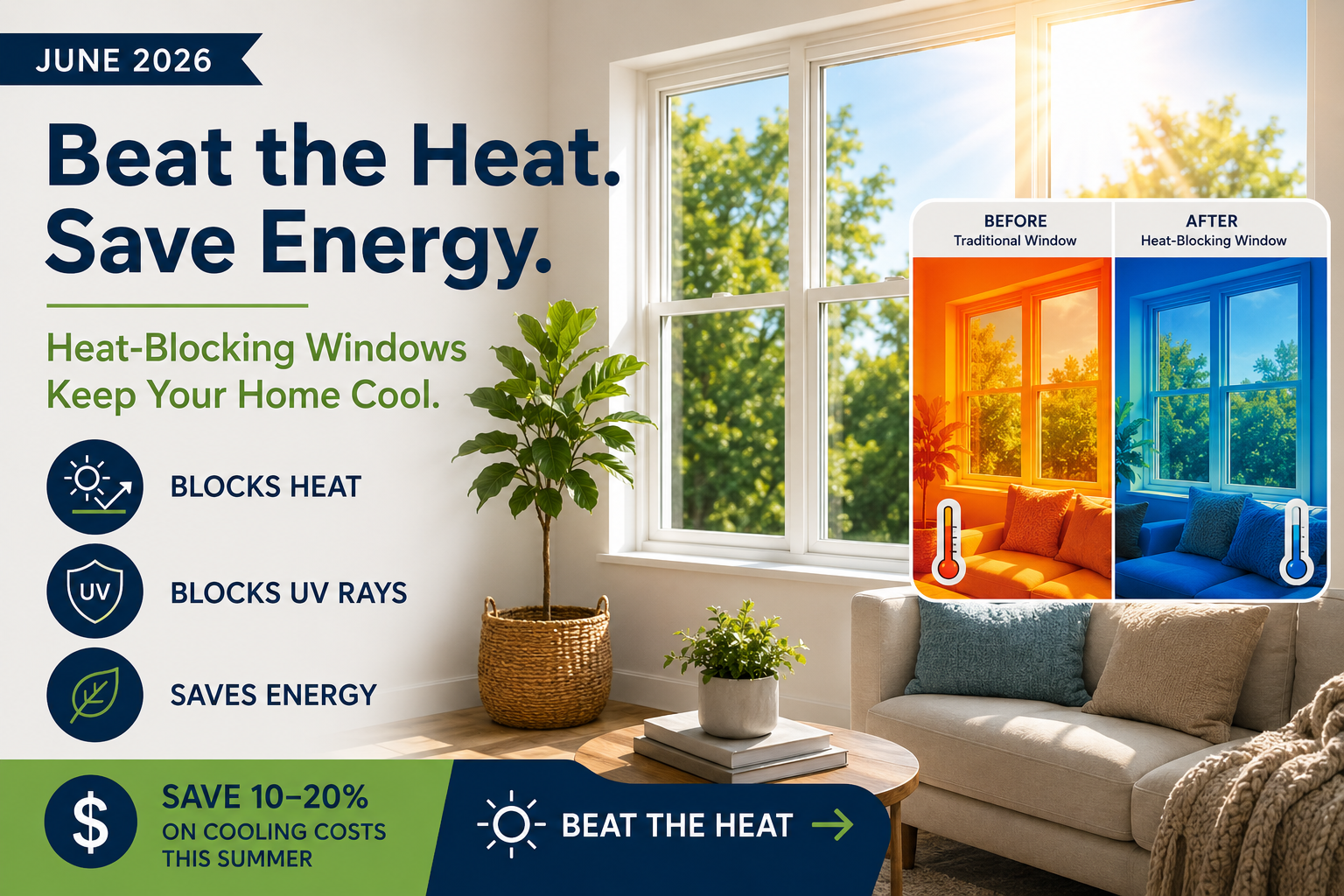
As summer temperatures rise, most homeowners expect higher energy bills. What many don't realize is that their windows may be one of the biggest reasons their home struggles to stay cool.
Older windows allow heat and harmful UV rays to enter your home, forcing your air conditioning system to work harder throughout the day. The result? Higher utility bills, uncomfortable rooms, and unnecessary wear on your HVAC system.
The good news is that modern energy-efficient windows are designed to help block heat, reduce UV exposure, and keep your home comfortable all summer long.
Here's how heat-blocking window technology works—and why it may be one of the smartest home upgrades you can make this season.
How Windows Affect Your Home's Temperature
Many homeowners assume insulation and air conditioning are the biggest factors in summer comfort.
While they're important, your windows play a major role in how much heat enters your home.
Sunlight passing through traditional glass creates what's known as solar heat gain. This heat builds up inside your home throughout the day, especially in rooms with large windows or direct sunlight exposure.
The more heat that enters your home, the harder your cooling system has to work to maintain a comfortable temperature.
That's where modern window technology makes a difference.
What Are Heat-Blocking Windows?
Heat-blocking windows are designed with advanced glass technology that helps reduce the amount of solar heat entering your home.
Many energy-efficient windows include:
Low-E (Low Emissivity) glass coatings
Double or triple-pane construction
Argon or krypton gas fills
Insulated window frames
UV-filtering technology
Together, these features help reflect heat away from your home while still allowing natural light to enter.
The result is a brighter, cooler, and more comfortable living space.
The Power of UV Protection
Summer sunlight doesn't just raise indoor temperatures—it can also damage your home's interior over time.
Ultraviolet (UV) rays can cause:
Hardwood floors to fade
Furniture discoloration
Carpet fading
Damage to artwork and décor
Premature aging of fabrics and upholstery
Many modern windows block up to 95% or more of harmful UV rays while maintaining clear visibility and natural lighting.
That means you can enjoy sunlight without sacrificing the appearance of your home's interior.
How Much Energy Can You Save?
One of the biggest benefits of upgrading to energy-efficient summer windows is the potential reduction in cooling costs.
When less heat enters your home:
Your air conditioner runs less frequently
Indoor temperatures remain more consistent
Energy consumption decreases
Monthly utility bills may be reduced
While savings vary depending on climate, home size, and window condition, homeowners often notice improved comfort almost immediately after installation.
The long-term energy savings can continue for years.
Signs Your Current Windows Are Costing You Money
Not sure if your windows are performing efficiently?
Here are a few warning signs:
Rooms feel noticeably hotter than others
You feel heat near windows during the afternoon
Your air conditioner runs constantly
Utility bills spike during summer months
Furniture or flooring shows signs of fading
Windows are older than 15–20 years
If several of these sound familiar, your windows may be allowing excessive heat transfer into your home.
Before & After: The Difference Modern Windows Make
Many homeowners are surprised by the difference new windows can create.
Before upgrading, common complaints include:
Hot spots throughout the house
Difficulty maintaining indoor temperatures
High summer energy bills
Excessive glare from sunlight
After installing modern energy-efficient windows, homeowners often notice:
More comfortable indoor temperatures
Reduced glare
Lower cooling demands
Improved energy efficiency
Better protection from UV damage
The transformation is often noticeable within the first few days of summer weather.
Summer Energy Tip: Don't Wait Until Peak Heat
Many homeowners wait until temperatures become unbearable before exploring window replacement.
However, upgrading before the hottest part of summer allows you to enjoy the benefits all season long.
Scheduling your project early can also help avoid peak-season installation demand and provide more flexibility when selecting products and installation dates.
Trend Alert: Energy Efficiency Continues to Lead Home Upgrades
Homeowners today are investing in upgrades that improve both comfort and long-term value.
Among the most popular improvements are:
Energy-efficient windows
UV-blocking glass technology
Smart home climate solutions
Sustainable building materials
High-performance insulation systems
These upgrades help create homes that are more comfortable, efficient, and cost-effective to maintain.
Summer Window Upgrade Checklist
If you're considering replacing your windows, look for:
✔ Low-E glass coatings
✔ UV protection technology
✔ Energy Star® rated products
✔ Double or triple-pane glass
✔ Professional installation
✔ Strong manufacturer warranties
✔ Products designed for your local climate
Choosing the right combination of features can maximize both comfort and energy savings.
Final Thoughts: Beat the Heat and Lower Your Energy Costs
Your windows do more than provide a view—they directly impact your home's comfort, energy efficiency, and protection from the summer sun.
By upgrading to modern heat-blocking windows, you can reduce heat transfer, protect your interior from UV damage, and potentially lower your cooling costs throughout the hottest months of the year.
A cooler home, greater comfort, and long-term energy savings make window replacement one of the smartest summer home improvement investments available.
👉 Ready to stay cool and save energy this summer?
